






Documentary Filmmaking in the Age of AI: A 2026 Independent Producer's Toolkit
Generative and machine-learning tools have moved quickly into documentary post-production, where they can accelerate repetitive tasks such as transcript generation, rough subtitle drafts, noise reduction and dialogue cleanup, and first-pass color matching. Used well, these tools free up time for the parts of documentary work that still depend on human judgment: structuring a narrative, verifying facts, and building trust with subjects.
The trade-offs deserve honesty. AI transcription and subtitles still require human review for accuracy, especially with accents, technical terms, and names. Automated color or audio "fixes" can flatten a filmmaker's intent, and generative tools raise real questions about consent, copyright, and disclosure — particularly in nonfiction, where audiences reasonably expect that what they see and hear reflects reality. Ethical guidelines in this area are still evolving.
For independent producers, the practical takeaway is to treat AI as an assistant rather than an author: automate the tedious, keep a human in the loop for anything affecting truth or authorship, and be transparent with audiences and collaborators about how tools are used.
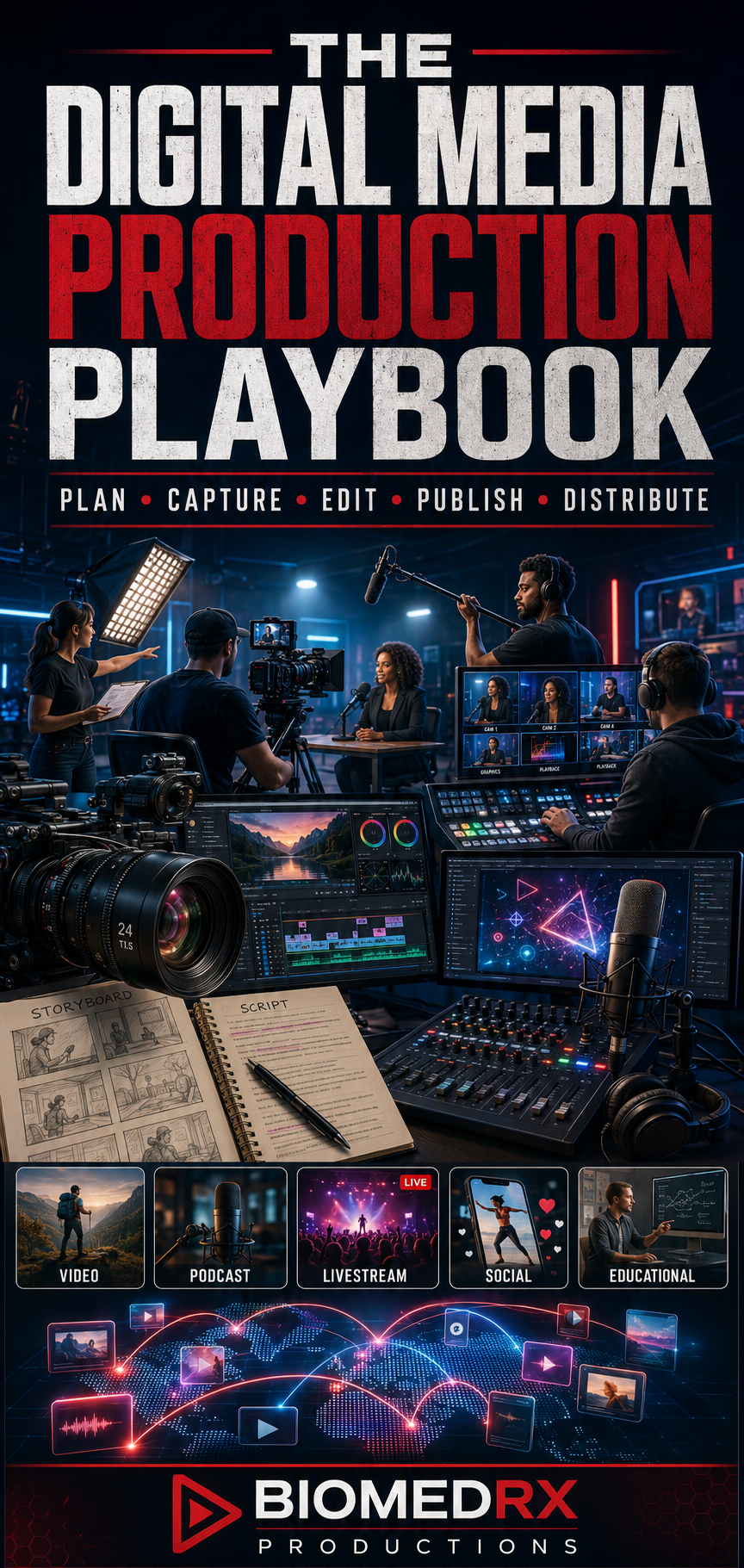
The distribution math also keeps shifting under independent producers’ feet. Edison Research’s Infinite Dial 2026 found that 58% of Americans now consume podcasts monthly — an estimated 167 million people — and that video-first platforms have become a leading way audiences discover long-form audio and documentary content. For a lean production house that means designing every project to travel across screens from day one: a broadcast cut, a vertical social edit, and a searchable, captioned, rights-cleared archive. We build that multi-platform roadmap into pre-production so a single shoot earns its keep across the widest possible audience.
Sources: Federal Communications Commission; U.S. Copyright Office; Edison Research — The Infinite Dial 2026